
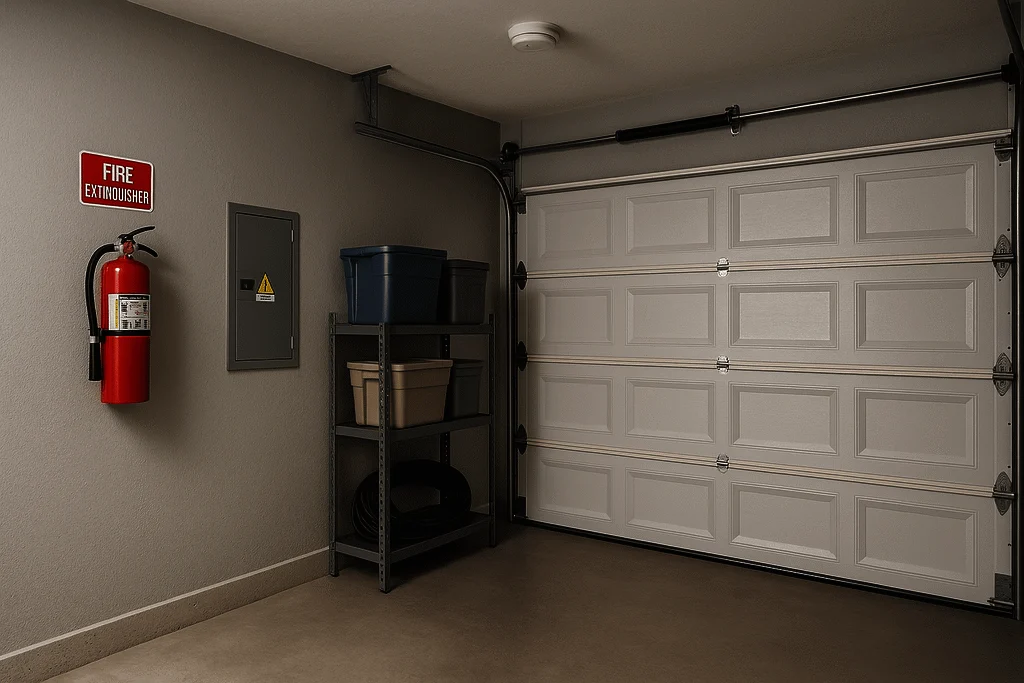
Garages are essential parts of residential buildings, commercial properties, workshops, and industrial facilities. They provide space for parking vehicles, storing tools, performing repairs, and keeping equipment. However, garages can also contain several fire hazards, including petrol, diesel, lubricants, electrical wiring, batteries, and combustible materials.
A small spark, an electrical fault, or an overheated vehicle component can start a fire that spreads rapidly if the right safety measures are not in place. Smoke can accumulate, visibility can decrease, and people may have limited time to escape.
Garage fire safety is the process of identifying these hazards, preventing fires, detecting emergencies early, and ensuring that occupants can evacuate safely. It combines suitable building design, fire detection systems, firefighting equipment, maintenance procedures, and emergency training.
In Pakistan, garage fire safety is relevant to homes, apartment buildings, shopping centres, vehicle workshops, parking structures, and industrial facilities. Understanding how these systems work helps property owners, managers, workers, and residents make informed decisions about protecting people and property.
This guide explains the main components of garage fire safety, how fire alarm systems operate, what precautions are important, and how regular maintenance supports a safer environment.
1. Understanding the Main Fire Hazards in Garages
The first step in garage fire safety is understanding what can cause a fire. Different garages have different risks, depending on their size, purpose, equipment, and the materials stored inside.
Fuel and Flammable Liquids
Petrol, diesel, engine oil, paint, solvents, and cleaning products may be present in vehicle garages and repair workshops. Some of these substances can produce flammable vapours. If vapours encounter a suitable ignition source, they can ignite.
Fuel should never be stored casually in open containers. Approved storage arrangements, good ventilation, and appropriate handling procedures are essential.
Electrical Faults
Damaged wiring, overloaded circuits, loose connections, faulty chargers, and poorly maintained electrical equipment can produce heat or sparks.
Garages may also contain power tools, compressors, lighting systems, electric vehicle chargers, and extension cords. These should be installed and maintained according to their intended use and applicable electrical requirements.
Vehicle-Related Hazards
Vehicles contain several materials and systems that can contribute to a fire, including fuel, lubricants, electrical wiring, tyres, upholstery, and batteries.
Mechanical problems, fuel leaks, overheated components, and damaged electrical systems can increase the risk of ignition.
Battery and Charging Hazards
Conventional vehicle batteries and lithium-ion batteries require appropriate handling and charging practices. Damaged batteries, unsuitable chargers, and overheating can create fire hazards.
Electric vehicle charging areas need particular attention to charger installation, electrical protection, vehicle access, and emergency procedures.
Clutter and Combustible Storage
Cardboard boxes, paper, fabrics, wood, packaging, and waste materials can provide fuel for a fire.
Keeping unnecessary combustible materials away from vehicles, electrical equipment, and ignition sources helps reduce the potential for fire spread.
2. What Is a Garage Fire Safety System?
A garage fire safety system is a combination of measures designed to prevent fires, detect them early, alert occupants, and support safe evacuation and firefighting.
It is not simply a fire extinguisher or a smoke detector. An effective arrangement considers the entire garage, including entrances, exits, vehicle spaces, storage areas, electrical rooms, and any adjoining occupied buildings.
A typical system may include:
- Fire prevention and housekeeping procedures.
- Smoke, heat, or other suitable fire detectors.
- A fire alarm control panel.
- Audible and visual alarm devices.
- Emergency lighting and exit signs.
- Portable fire extinguishers.
- Automatic sprinkler systems where required by the design and applicable regulations.
- Ventilation and smoke management provisions.
- Clearly marked escape routes.
- Inspection, testing, and emergency training.
The exact combination depends on the building’s use, size, layout, fire hazards, occupancy, and applicable requirements.
A small domestic garage may need a different arrangement from a multilevel underground car park or a commercial vehicle workshop.
3. How Does a Garage Fire Alarm System Actually Work?
A fire alarm system helps identify a possible fire and warn people before conditions become too dangerous.
A typical system follows a sequence: detection, signal transmission, alarm activation, occupant response, and, where designed, automatic control of other building systems.
Step 1: Detecting Signs of Fire
Fire detectors monitor the environment for signs associated with a developing fire.
Different detector types identify different conditions.
Smoke detectors: These detect smoke particles. Depending on the technology and environment, they may be suitable for certain garage areas, but vehicle exhaust, dust, and other airborne particles can cause unwanted alarms.
Heat detectors: These respond to a specified temperature or a particular rate of temperature increase. They may be appropriate in some garages where smoke detectors could produce frequent nuisance alarms.
Flame detectors: These detect characteristic radiation from flames. They may be used in selected industrial or high-risk applications after a proper assessment.
Detector selection should be based on the environment, fire risks, and system design rather than choosing the same device for every garage.
Step 2: Sending a Signal to the Control Panel
When a detector identifies a fire-related condition, it sends a signal to the fire alarm control panel.
The panel receives and processes the signal. Depending on the system, it may identify the device or zone where the alarm originated.
This information helps staff or emergency responders understand where an incident may be occurring.
Step 3: Activating Alarms
When the system enters an alarm condition, it activates appropriate warning devices.
These may include:
- Audible sounders.
- Bells or sirens.
- Visual warning devices such as strobes.
- Voice evacuation announcements in larger buildings.
The purpose is to alert people in the affected garage and, where appropriate, adjoining occupied areas.
Alarm audibility and visibility are important because garages can be noisy, enclosed, or difficult to navigate.
Step 4: Supporting Evacuation
Once people receive the warning, they should follow the established emergency procedures and leave using safe, designated routes.
Emergency exit signs and lighting help people identify escape routes, especially when normal lighting fails or visibility is reduced.
People should not waste time collecting belongings or attempting to move vehicles during an emergency.
Step 5: Activating Other Safety Systems
Depending on the building design, a fire alarm system may also interact with other equipment, such as:
- Smoke control or ventilation systems.
- Fire and smoke doors.
- Access-control arrangements.
- Lift controls.
- Sprinkler monitoring.
- Remote alarm monitoring systems.
These interactions must be designed and tested as an integrated system. A fire alarm panel does not automatically provide every protective function unless the relevant equipment is installed and properly connected.
4. Choosing Suitable Fire Detection Devices for Garages
Not every fire detector performs equally well in every garage environment.
A residential garage, an underground car park, and a vehicle repair workshop may have different sources of heat, airborne particles, exhaust fumes, and ventilation.
Smoke Detection
Smoke detectors can provide early warning in suitable locations. However, their placement and technology need careful consideration in garages where exhaust fumes, dust, or other particles may interfere with normal operation.
Heat Detection
Heat detectors can be useful in locations where environmental conditions make smoke detection less suitable. They generally respond to heat rather than detecting the earliest smoke from every fire.
The appropriate detector depends on the expected fire development and the level of early warning needed.
Manual Call Points
Manual call points allow people to activate the fire alarm when they discover a fire or another emergency.
They should be positioned where required by the design, readily accessible, and clearly identifiable.
Sounders and Visual Alarms
Warning devices should be selected to suit the environment. Background noise, garage dimensions, partitions, and visibility can affect whether occupants receive the warning.
A competent fire safety professional should assess device locations and ensure that the alarm can be perceived in relevant areas.
5. The Role of Fire Extinguishers in Garage Safety
Portable fire extinguishers provide a way to tackle certain small fires when it is safe and appropriate to do so.
Different extinguishers are designed for different types of fire. Selecting the wrong extinguisher can be ineffective or dangerous.
Common Extinguisher Types
| Extinguisher type | Typical applications |
|---|---|
| Dry chemical powder | Certain flammable-liquid and electrical-related fire risks, depending on its rating |
| Carbon dioxide (CO₂) | Certain flammable-liquid and energised electrical equipment fires |
| Foam | Suitable classes of flammable-liquid and solid-material fires, subject to product rating |
| Water-based | Suitable ordinary combustible materials, but generally not flammable-liquid or energised electrical fires |
The correct type and rating should be selected according to the hazards present and applicable requirements.
Safe Extinguisher Use
Only attempt to extinguish a fire if it is small, you have received appropriate training, the extinguisher is suitable, and you have a clear escape route.
If the fire grows, smoke becomes heavy, or your escape route is threatened, leave immediately and call the fire service.
Never use water on burning petrol or other flammable liquids. Do not use water on energised electrical equipment unless the equipment and firefighting method are specifically designed for that use.
6. Automatic Sprinkler Systems in Garages
Automatic sprinklers are designed to control or suppress a fire by discharging water when their operating conditions are reached.
A typical sprinkler system consists of a water supply, pipes, sprinkler heads, control valves, and associated monitoring equipment.
How Sprinklers Operate
- A fire produces heat that rises toward the ceiling.
- The heat affects a sprinkler head, causing its heat-sensitive operating element to activate when its rated conditions are reached.
- Water is discharged through the activated sprinkler head.
- Water helps control the fire, limiting its growth and reducing heat release.
- Depending on the system, water flow may also activate a monitoring signal or fire alarm.
In many conventional sprinkler systems, individual sprinkler heads operate independently. They do not all necessarily discharge water at once.
Sprinklers are not a substitute for evacuation, fire alarms, or emergency services. Their purpose is to help control a fire and reduce its consequences.
Where Are Sprinklers Important?
Enclosed parking structures, underground garages, and larger commercial facilities may require automatic sprinkler protection depending on the applicable code, occupancy, and building design.
The specific requirements for a property should be confirmed with the relevant authority and a qualified fire safety professional.
7. Ventilation and Smoke Management
Smoke can be one of the most dangerous aspects of a garage fire. It can reduce visibility, irritate the eyes and lungs, and make escape difficult.
Garages also need ventilation to manage vehicle exhaust during normal operation. Fire-related smoke control, however, is a separate design consideration.
Normal Ventilation
Normal garage ventilation helps remove vehicle exhaust and maintain acceptable air conditions.
Depending on the building, this may involve natural openings, mechanical exhaust fans, or a combination of ventilation methods.
Smoke Management During a Fire
A smoke management system may use dedicated fans, dampers, control equipment, and other features to manage smoke movement.
The intended purpose is to limit smoke spread and support safe evacuation and emergency response.
A system designed for normal exhaust ventilation should not automatically be assumed to provide suitable smoke control during a fire.
Important Considerations
- Keep ventilation openings clear.
- Maintain fans and associated electrical equipment.
- Ensure fire alarm interfaces operate as intended.
- Do not block smoke-control equipment with stored items.
- Have the system tested under its intended emergency operating conditions.
8. Emergency Exits and Evacuation Planning
A garage fire safety system is incomplete without a reliable evacuation plan.
In an emergency, occupants need to know where to go, which exits to use, and how to avoid areas affected by smoke or fire.
Clearly Marked Exits
Emergency exits should be identifiable, accessible, and appropriate for the building’s occupancy and layout.
Exit signs and emergency lighting can help occupants navigate when normal lighting is interrupted.
Unobstructed Escape Routes
Vehicles, cartons, tools, waste, and stored equipment should never obstruct designated escape routes.
Pedestrian routes should be clearly distinguishable from vehicle movement areas wherever practicable.
Evacuation Procedures
A practical evacuation plan should explain:
- How to raise the alarm.
- Which exits occupants should use.
- Where people should assemble outside.
- Who contacts emergency services.
- How staff account for workers and visitors.
- How emergency responders can access the building.
People should not re-enter a burning or smoke-filled garage to retrieve belongings or vehicles.
9. Fire Prevention Measures for Everyday Garage Use
Preventing a fire is often easier than managing one after it starts. Everyday practices can significantly reduce avoidable hazards.
Keep the Garage Clean
Remove unnecessary cardboard, paper, oily rags, packaging, and other combustible waste.
Store tools and materials in suitable locations without obstructing exits or access to firefighting equipment.
Handle Fuel Carefully
Use approved containers and follow relevant storage and handling requirements.
Do not smoke or use open flames near fuel, flammable liquids, or areas where flammable vapours may accumulate.
Maintain Electrical Equipment
Have damaged wiring, outlets, chargers, and electrical equipment repaired by qualified personnel.
Avoid overloaded circuits and unsuitable extension leads.
Manage Hot Work
Welding, grinding, cutting, and similar activities can produce sparks and hot particles.
Before beginning hot work, assess nearby combustible materials, fuel vapours, vehicle hazards, and the need for appropriate permits, fire watches, and firefighting equipment.
Inspect Vehicles
Investigate fuel leaks, unusual electrical smells, damaged batteries, and signs of overheating.
Vehicles with suspected serious faults should be assessed by a qualified mechanic rather than routinely parked in a crowded garage.
10. Special Fire Safety Considerations for Electric Vehicles
Electric vehicles introduce additional considerations because they use high-voltage electrical systems and traction batteries.
Lithium-ion battery incidents can involve intense heat, hazardous gases, and the possibility of renewed heating or fire after the initial event.
This does not mean that every electric vehicle presents an immediate fire danger. It means that charging and incident response should be based on the vehicle manufacturer’s instructions and the facility’s fire safety design.
Safe Charging Practices
- Use suitable charging equipment installed according to applicable electrical requirements.
- Avoid damaged charging cables and connectors.
- Follow manufacturer instructions.
- Do not charge a vehicle with a suspected damaged battery without appropriate professional assessment.
- Keep charging areas accessible and avoid obstructing exits.
- Provide clear emergency procedures for charging-related incidents.
Emergency Response
If an electric vehicle shows signs of a battery emergency, such as unusual smoke, intense heat, or unusual popping sounds, people should move away and call emergency services.
Do not attempt to handle a suspected battery fire using improvised methods. Emergency responders need to know that an electric vehicle may be involved.
11. Fire Safety Requirements in Pakistan
Fire safety requirements depend on the location, occupancy, building characteristics, and applicable local regulations.
The Building Code of Pakistan – Fire Safety Provisions 2016 provides a national framework addressing fire protection and life safety. Local authorities and provincial requirements may also apply.
In Punjab, the Community Safety Buildings Regulations include provisions addressing fire alarms, firefighting arrangements, evacuation, and underground parking sprinkler protection. The requirements should be checked against the relevant building category and current regulations.
In Sindh, Civil Defence describes inspection and technical assistance relating to fire safety in commercial and industrial premises, workshops, warehouses, and high-rise buildings.
What Should Garage Owners Do?
Property owners and managers should:
- Identify the authority having jurisdiction over the property.
- Confirm the building’s occupancy classification and applicable requirements.
- Obtain professional advice on the necessary fire protection systems.
- Arrange inspections and approvals where required.
- Maintain records of installation, testing, repairs, and training.
Important: Requirements for a private home garage may differ significantly from those for a commercial workshop or underground public car park. Do not assume that one set of requirements applies to every garage in Pakistan.
12. Inspection and Maintenance of Garage Fire Safety Equipment
Installing fire safety equipment is only the beginning. Systems must remain functional throughout the building’s operation.
Regular inspections help identify faults, damage, obstruction, and deterioration before an emergency occurs.
Fire Alarm Maintenance
Maintenance should cover the control panel, detectors, manual call points, sounders, backup power, and relevant system interfaces.
Testing should follow the manufacturer’s instructions, applicable standards, and the approved maintenance programme.
Sprinkler Maintenance
Sprinkler inspections should consider control valves, water supplies, pumps, pipework, sprinkler heads, and monitoring equipment as applicable.
Sprinkler heads should not be painted, damaged, obstructed, or used to support objects.
Extinguisher Maintenance
Extinguishers should be accessible, correctly identified, and maintained according to their type and the applicable requirements.
Staff should report missing, damaged, discharged, or visibly defective extinguishers promptly.
Emergency Lighting and Exits
Check that exit signs are visible, emergency lights operate as intended, and escape routes remain unobstructed.
Record Keeping
A maintenance record should include inspection dates, identified faults, corrective actions, test results, and the person or company responsible for the work.
13. Staff Training and Emergency Preparedness
Even a well-designed fire safety system depends on people understanding what to do when an alarm sounds.
Training should be appropriate for the type of garage and the duties of the people working there.
Essential Training Topics
- Recognising fire hazards.
- Raising the alarm.
- Identifying escape routes.
- Evacuating visitors and customers.
- Contacting emergency services.
- Understanding when not to fight a fire.
- Using extinguishers only when trained and when conditions are safe.
- Reporting damaged equipment and unsafe conditions.
Conducting Fire Drills
Fire drills help staff become familiar with evacuation procedures and identify problems such as blocked exits, unclear instructions, or inadequate warning coverage.
After a drill, managers should review what worked, document issues, and correct identified weaknesses.
14. How to Select a Garage Fire Alarm System in Pakistan
Choosing a fire alarm system requires more than comparing equipment prices.
The system should suit the actual garage environment, comply with applicable requirements, and be installed and maintained by qualified professionals.
Assess the Property
Consider:
- Garage size and ceiling height.
- Number of floors and vehicle spaces.
- Whether the garage is enclosed or open.
- The presence of workshops or fuel storage.
- Electrical and vehicle-charging equipment.
- The number of occupants and visitors.
- Available escape routes.
- Environmental conditions such as dust and exhaust fumes.
Select Suitable Equipment
Choose detectors, alarms, control panels, and backup power arrangements based on the documented fire risk and applicable design standards.
For larger facilities, consider whether the system needs to integrate with other fire protection and building management equipment.
Check Installation and Support
Before selecting a provider, ask about:
- Relevant installation experience.
- Product documentation and compatibility.
- Testing and commissioning procedures.
- Maintenance and repair services.
- Staff training.
- Documentation and handover records.
A professional assessment is especially important for underground parking facilities, multistorey garages, and buildings connected to residential or commercial spaces.
For further information about fire protection solutions and fire alarm systems in Pakistan, visit Flame Defender.
15. Common Garage Fire Safety Mistakes to Avoid
Some preventable mistakes can undermine an otherwise useful safety system.
| Mistake | Why it matters |
|---|---|
| Blocking emergency exits | Delays evacuation |
| Ignoring faulty alarms | Can prevent timely warning |
| Storing fuel carelessly | Increases fire and vapour hazards |
| Using unsuitable extinguishers | May fail to control the fire or create additional danger |
| Neglecting maintenance | Allows faults to remain undetected |
| Ignoring electrical damage | Can leave ignition hazards unresolved |
| Failing to train staff | Causes confusion during emergencies |
| Assuming ventilation replaces smoke control | May leave occupants exposed to dangerous smoke |
Avoiding these mistakes requires regular inspections, good housekeeping, and clear responsibility for fire safety.
Conclusion
Garage fire safety works by combining prevention, early detection, occupant warning, appropriate firefighting measures, smoke management, and safe evacuation.
Fire alarm systems play a central role by detecting fire-related conditions, transmitting signals to a control panel, and activating warnings. Depending on the design, they may also coordinate with sprinklers, ventilation controls, and other protective equipment.
However, no single device can protect an entire garage on its own. A fire extinguisher cannot replace an alarm, and an alarm cannot replace an unobstructed exit or a suitable suppression system.
For garages in Pakistan, the appropriate safety arrangements depend on the building’s size, purpose, hazards, and applicable local requirements. Owners and managers should seek qualified advice, arrange required inspections, maintain equipment, and ensure that occupants understand emergency procedures.
A well-planned and properly maintained garage fire safety system helps reduce avoidable risks and supports the protection of people, vehicles, and property.
Frequently Asked Questions (FAQs)
1. How does a garage fire alarm system work?
A garage fire alarm system uses suitable detectors or manual call points to identify a possible fire. The signal reaches a control panel, which activates audible or visual warnings. Depending on the design, it may also communicate with other safety systems.
2. Which fire detector is suitable for a garage?
The appropriate detector depends on the garage environment. Heat detectors may be suitable in certain areas where exhaust or airborne particles could affect smoke detection. Smoke, heat, and other detector types should be selected through a fire risk assessment and according to applicable requirements.
3. Are sprinklers necessary in underground parking garages in Pakistan?
Some underground parking facilities are subject to automatic sprinkler requirements. Owners should confirm the requirements that apply to their specific building and jurisdiction.
4. How often should garage fire safety equipment be inspected?
Inspection and testing frequency depends on the equipment, applicable standards, manufacturer instructions, and local requirements. Fire alarm systems, extinguishers, sprinklers, emergency lighting, and exits should be included in a documented maintenance programme.
5. What should I do if a fire starts in my garage?
Raise the alarm, warn others, and evacuate using a safe route. Call the local fire service and keep away from smoke and flames. Do not attempt to retrieve a vehicle or fight a growing fire. Only consider using a suitable extinguisher on a small fire if you are trained and have a clear escape route.